
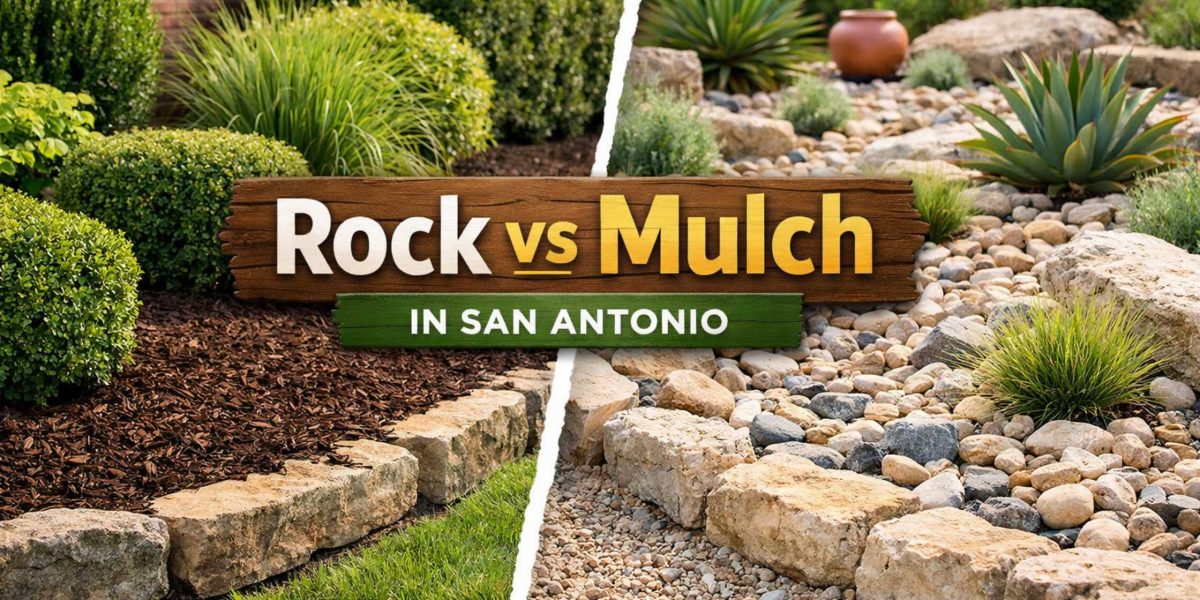
Rock Beds vs. Mulch Beds in San Antonio: Pros, Cons, and What to Choose
If you’re landscaping in San Antonio, TX, choosing between rock beds and mulch beds isn’t just about looks—it affects water efficiency, weed pressure, soil health, and long-term maintenance. With hot summers and a strong water-conservation mindset (SAWS encourages water-wise landscaping), your bed material can make your yard easier to maintain year-round.
Below is a practical local guide from Lawn DR Landscaping for homeowners across Stone Oak, Alamo Heights, Helotes, Leon Valley, and surrounding Bexar County.
Quick answer: which is better in San Antonio?
- Mulch beds are typically better for plant health and improving soil over time (moisture retention and temperature regulation).
- Rock beds are typically better for a clean, durable look with fewer “refresh” cycles—but they can run hotter and still need weed control.
Many San Antonio landscapes do best with a hybrid approach: mulch around shrubs/trees + rock in decorative or low-plant zones.
Mulch beds in San Antonio: pros and cons
Pros
- Helps soil retain moisture and supports healthier roots.
- Regulates soil temperature, which matters in San Antonio’s summer heat.
- Suppresses weeds when installed at the right depth and kept evenly spread.
- Easy to modify later (add plants, change borders, redo bed shape).
Cons
- Breaks down over time, so it needs periodic top-offs.
- Can wash out in heavy rain if the bed isn’t edged or graded correctly.
- Can attract fungus/gnats if overwatered or piled against stems/trunks.
Best for: planting beds, foundation beds, tree rings, and any area where you want plants to thrive and soil quality to improve.
Rock beds in San Antonio: pros and cons
San Antonio homes commonly use limestone, river rock, crushed granite, and decomposed granite for a clean local look.
Pros
- Long-lasting appearance (doesn’t decompose like mulch).
- Great for xeriscape-style design when paired with drought-tolerant plants and efficient irrigation.
- Less float/movement in moderate rain compared to loose mulch (when installed correctly with edging).
Cons
- Heat build-up: rock can raise bed temperatures and stress plants in summer—especially on south/west exposures.
- Weeds still happen: debris and windblown soil settle between stones over time.
- Harder to change later: adding plants or adjusting irrigation lines is more labor.
Best for: decorative zones with fewer plants, side yards, around AC pads, along fences, and modern xeriscape layouts.
San Antonio-specific warning: landscape fabric isn’t “set it and forget it”
A common myth is that landscape fabric prevents weeds forever. In reality, extension guidance warns it often becomes a maintenance issue and is not a permanent weed solution.
Under rock, fabric can also restrict air/water movement and build up sediment over time, reducing permeability.
Our approach: correct bed prep + proper edging + correct material depth + a simple maintenance plan beats relying on fabric alone.
What we recommend most often in San Antonio (by situation)
Choose mulch if you want…
- Better long-term plant performance and healthier soil
- Easier seasonal upgrades (color, new plants, small redesigns)
- A softer, more traditional landscape look
Choose rock if you want…
- A crisp, modern aesthetic that holds its appearance longer
- A xeriscape/water-wise style that fits San Antonio’s conservation mindset
- Fewer refresh cycles (with routine weed management)
Choose a hybrid if you want the best of both
This is one of the most successful setups we install in San Antonio:
- Mulch around shrubs/trees (protects roots + improves soil)
- Rock in decorative zones (durable look + clean transitions)
Get a San Antonio bed upgrade plan from Lawn DR Landscaping
Want beds that look clean, reduce weeds, and make sense for San Antonio heat and your watering routine?
Call Lawn DR Landscaping to schedule a Rock vs. Mulch Bed Consultation in San Antonio, TX.
We’ll look at sun exposure, drainage, plant health, and your maintenance goals—and recommend mulch, rock, or a hybrid that fits your property.
FAQ:
Does mulch help with weeds?
Yes—mulch suppresses many weed seedlings by blocking light, especially when applied at the right thickness and maintained evenly.
Will rock beds eliminate watering?
No. Rock doesn’t replace good plant selection or efficient irrigation, but it can support a water-wise landscape when designed correctly.
Which is lower maintenance long-term?
Rock typically needs fewer refresh cycles, but it still needs weed control and occasional leveling/top-offs. Mulch needs replenishing, but it’s easier to modify and is often better for plant health.