
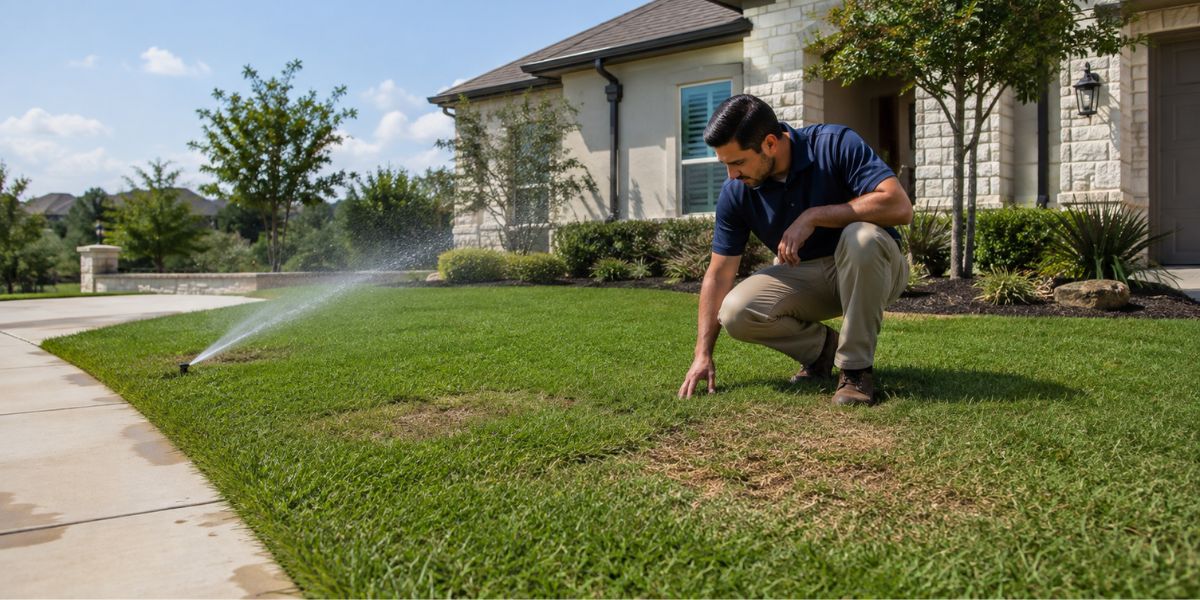
Brown Spots in the Lawn: Irrigation, Heat, Soil, or Pests?
Brown spots can be frustrating because their cause is not always obvious. During a hot San Antonio summer, it is easy to assume that every dry-looking patch needs more water. However, brown grass may also be related to uneven irrigation coverage, compacted soil, mowing habits, pests, disease, reflected heat, shade, or drainage problems.
Before changing your watering schedule or applying a lawn treatment, take time to investigate the affected area. Brown grass is an important clue, but an on-site assessment may be necessary to determine the underlying problem.
Check Irrigation Coverage First
When homeowners notice brown spots in a lawn in San Antonio, irrigation coverage is one of the first things to inspect. Run the sprinkler system one zone at a time and watch how water moves across the lawn.
Look for common problems such as:
- Broken, clogged, blocked, or tilted sprinkler heads
- Nozzles spraying in the wrong direction
- Plants or grass interfering with the spray
- Low water pressure in one irrigation zone
- Water landing on sidewalks instead of the lawn
- Leaks, damaged valves, or controller problems
- Areas where sprinkler patterns do not overlap
A coverage problem can leave one section dry even when the rest of the lawn receives enough water. This sometimes creates a defined patch or strip that follows the edge of a sprinkler’s reach.
Lawn DR Landscaping provides irrigation diagnosis and repair services, including work involving sprinkler heads, valves, leaks, controller units, and system testing. An irrigation checkup can help determine whether poor coverage is contributing to the lawn’s stress.
Consider Heat and Sun Exposure
San Antonio lawns regularly face intense summer sunlight and high temperatures. Some areas may experience more heat stress than others, especially grass located beside driveways, sidewalks, stone borders, fences, or exterior walls.
These hard surfaces absorb and reflect heat, causing nearby soil to dry more quickly. A section of lawn in full afternoon sun may also need different attention than an area protected by trees or the home.
When examining a brown spot, note:
- How many hours of direct sunlight it receives
- Whether it is close to concrete, stone, or a wall
- Whether the area dries faster than the surrounding lawn
- Whether recent landscaping changes increased its sun exposure
Avoid assuming that additional irrigation is automatically the solution. Excessive watering can create runoff, waste water, or contribute to other lawn problems. Follow applicable local watering rules and evaluate coverage before adjusting the schedule.
Look at the Shape and Location
The pattern of the damaged grass may offer useful information, although appearance alone cannot confirm a diagnosis.
A straight line or narrow strip could be associated with sprinkler coverage, mowing, foot traffic, or equipment. A patch near pavement may be experiencing reflected heat. A low section of the yard could remain wet longer after rain or irrigation, while grass on a slope may dry out more quickly.
Round or irregular patches may require closer inspection for pests or disease. However, several lawn problems can create similar symptoms, so avoid applying pesticides, fungicides, or other treatments based only on the shape of the spot.
Documenting when the damage appeared and whether it is spreading can help a lawn care professional evaluate the issue more effectively.
Inspect the Soil and Drainage
Healthy grass depends on more than the amount of water applied. Water and air must also be able to reach the root zone.
Compacted soil can limit root development and prevent water from moving into the ground effectively. This is common in areas with heavy foot traffic, frequent equipment use, pets, or construction activity. In some compacted areas, water may run across the surface instead of soaking into the soil.
Drainage problems can produce the opposite condition. Grass in a low area may remain wet for too long, causing stress that can resemble drought damage.
Check whether the affected area feels unusually hard, stays soggy, develops standing water, or produces runoff during irrigation. Soil improvement, drainage corrections, or changes to landscape maintenance may be needed, depending on the conditions found during an assessment.
Review Mowing Habits
Cutting the lawn too short can make grass more vulnerable to summer stress. Short grass provides less shade for the soil and may lose moisture more quickly during periods of intense heat.
Other mowing-related problems can include dull mower blades, repeated scalping on uneven ground, and mowing while the lawn is already severely stressed. Dull blades may tear the grass instead of making a clean cut, leaving it with a brown or ragged appearance.
Use a mowing height appropriate for the grass variety and avoid removing too much of the blade at one time. Because recommended heights differ among turf types, identify the grass before making major maintenance changes.
Watch for Pests or Disease
Pests and lawn diseases can also contribute to brown or thinning areas. Possible warning signs include grass that pulls away easily, visible insects, damaged roots, unusual discoloration, or patches that continue spreading despite adequate irrigation coverage.
These symptoms should be evaluated carefully. Heat stress, poor soil, irrigation problems, disease, and pest activity can look similar from the surface. More than one issue may also be present at the same time.
A professional assessment can help narrow down the cause before treatments are selected. This reduces the risk of applying a product that does not address the actual problem.
What to Do Before Requesting an Assessment
Before contacting a lawn or irrigation professional, collect a few helpful details:
- Photograph the affected area from several angles.
- Run the irrigation system and observe each zone.
- Note when the brown spots first appeared.
- Check whether the affected area is expanding.
- Record its daily sun and shade exposure.
- Look for runoff, standing water, insects, or damaged roots.
- Review recent changes to mowing, watering, traffic, or landscaping.
This information can make an on-site inspection more productive and help distinguish between irrigation, maintenance, soil, drainage, pest, and environmental concerns.
Get Help Evaluating Brown Spots in Your Lawn
Brown grass does not always mean that your lawn simply needs more water. Identifying the source of the stress is the first step toward making an appropriate maintenance or repair plan.
Contact Lawn DR Landscaping to evaluate lawn stress, irrigation coverage, and landscape maintenance needs. After reviewing the property in person, the team can discuss relevant service options based on the conditions found.
Frequently Asked Questions
Are brown spots always caused by a lack of water?
No. Brown spots may be related to uneven irrigation coverage, heat stress, soil compaction, drainage, mowing habits, shade, pests, disease, or repeated traffic. An inspection may be needed to identify the cause.
What should I check first?
Begin by running the sprinkler system and checking whether water reaches the affected area. Then review mowing height, soil conditions, drainage, sunlight, foot traffic, and possible signs of pest or disease activity.
Can Lawn DR Landscaping help with brown spots?
Lawn DR Landscaping offers lawn care, landscaping, and irrigation services that may help address maintenance or irrigation coverage issues. The appropriate service should be determined after an on-site review.
Should I water more when I see brown spots?
Do not assume additional watering is the answer. First, check irrigation coverage and investigate other possible causes. Follow applicable San Antonio watering rules before changing the irrigation schedule.