
Drought-Tolerant Landscaping Ideas for San Antonio Yards
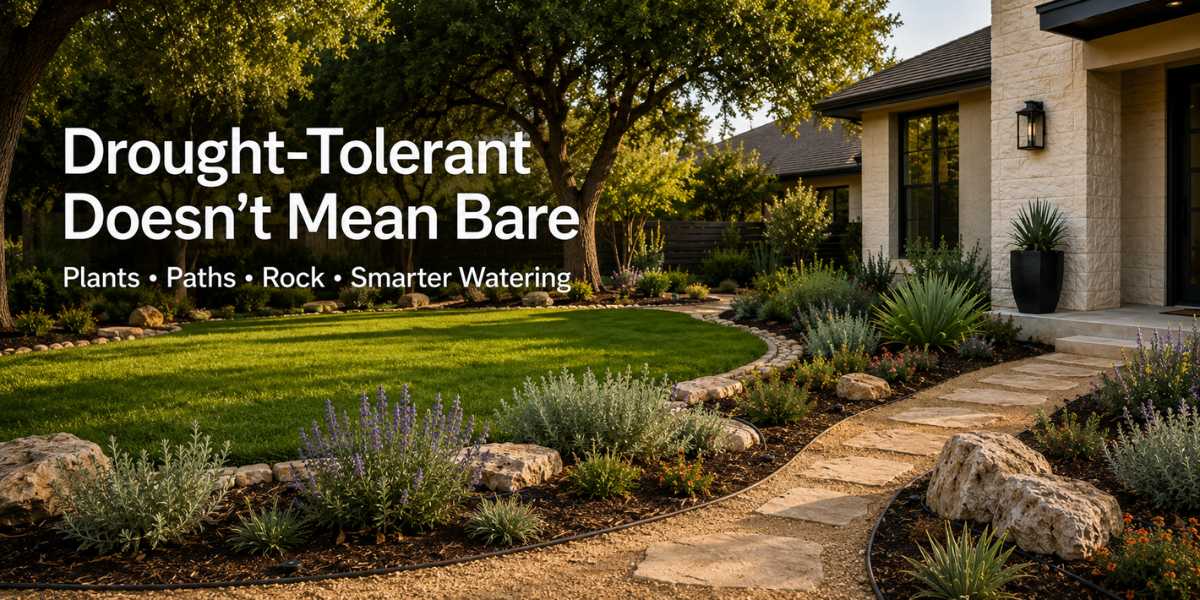
Drought-tolerant landscaping does not have to mean removing every plant and covering the yard with gravel. In San Antonio, a water-wise landscape can still be green, colorful, and comfortable while requiring less maintenance.
The goal is to design around South Texas heat, sun exposure, soil conditions, and watering needs. A balanced yard may include drought-tolerant plants, mulch, decorative rock, pathways, patios, efficient irrigation, and smaller areas of healthy lawn.
Start With Problem Areas
Before redesigning the entire property, identify the parts of the yard that are difficult to maintain.
Common problem areas include:
- Full-sun planting beds
- Sloped sections
- Narrow side yards
- Areas near driveways or sidewalks
- Spots where grass repeatedly thins out
- Sections that are difficult to mow or irrigate
These areas may be good candidates for drought-tolerant planting, mulch, rock installation, a pathway, or another low-maintenance feature.
Starting with one problem area can help improve the landscape without requiring a complete yard renovation.
Create Functional Landscape Zones
A drought-tolerant landscape often works best when the yard is divided into practical zones.
Healthy lawn can remain in areas used by children, pets, or outdoor activities. Other sections can become planting beds, patios, decorative rock areas, or walkways.
Ask these questions while planning:
- Which areas should remain lawn?
- Where could planting beds add color?
- Could a worn side yard become a pathway?
- Would a patio make the backyard more useful?
- Which areas receive full sun or shade?
Each part of the yard should have a clear purpose and a design that fits its conditions.
Choose Plants for the Location
Plant selection is an important part of drought-tolerant landscaping in San Antonio.
Choose plants based on:
- Sun exposure
- Soil and drainage
- Mature plant size
- Seasonal appearance
- Watering needs
Grouping plants with similar water requirements can make irrigation more efficient. It can also prevent one area from receiving too much water while another receives too little.
Native and adapted plants can add color, texture, and movement while being better suited to local growing conditions.
Use Mulch and Rock Strategically
Mulch can help planting beds retain moisture, reduce weeds, and moderate soil temperature. It also creates a clean visual separation between plants, turf, and pathways.
Decorative rock can be useful for borders, side yards, walkways, drainage-friendly areas, and low-maintenance beds. However, rock should not automatically replace every living plant.
Large rock-covered areas may absorb and reflect heat. A more balanced design combines rock with plants, mulch, trees, and limited turf to create a softer and more inviting landscape.
Add Pathways and Outdoor Living Areas
Hardscape features can make a yard more useful while reducing the amount of space that needs regular watering or mowing.
Possible features include:
- Flagstone walkways
- Granite pathways
- Stamped concrete patios
- Seating areas
- Stepping-stone paths
- Defined landscape borders
A pathway can improve a worn side yard, while a patio can create space for dining, entertaining, or relaxing.
Lawn DR Landscaping offers options that include xeriscaping with drought-resistant plants, tropical backyard accents, flagstone or stamped concrete patios, granite pathways, water features, and ponds.
Plan Irrigation Carefully
Drought-tolerant plants still need water while becoming established and may need occasional watering during extended dry periods.
Irrigation should be planned around each landscape zone. Turf, planting beds, trees, and containers may have different watering needs.
Drip irrigation can help deliver water closer to plant roots. Sprinkler systems should also be checked for leaks, poor coverage, and overspray onto sidewalks or patios.
The goal is not only to use less water, but to apply it more efficiently.
Improve Your Yard in Phases
Homeowners do not need to complete the entire project at once. Start with a full-sun bed, struggling side yard, or worn area near the driveway. Additional sections can be improved over time.
A successful drought-tolerant yard may include healthy lawn, planting beds, mulch, decorative rock, pathways, patios, and efficient irrigation. When these elements are planned together, the landscape can feel attractive, practical, and better suited to San Antonio conditions.
Ask Lawn DR Landscaping about drought-tolerant landscape design options for your front yard, backyard, side yard, or planting beds.
FAQ
1. What is drought-tolerant landscaping?
Drought-tolerant landscaping uses plants, mulch, rock, pathways, and efficient irrigation to create a yard that requires less water and maintenance. It is designed to better handle San Antonio’s heat and dry conditions.
2. Does drought-tolerant landscaping mean removing all the grass?
No. Many homeowners keep healthy lawn in areas used for pets, children, or outdoor activities while converting harder-to-maintain sections into planting beds, pathways, patios, or rock accents.
3. What plants work well in a drought-tolerant San Antonio yard?
The best choices depend on the amount of sunlight, soil conditions, drainage, mature plant size, and watering needs of each area. Native and adapted plants are often good options because they are better suited to local growing conditions.
4. Is mulch or decorative rock better for landscaping?
Both can be useful. Mulch can help moderate soil temperature, retain moisture, and reduce weeds, while decorative rock can work well for borders, pathways, drainage areas, and low-maintenance zones. Many yards benefit from a balanced combination of both.
5. Can drought-tolerant landscaping be completed in phases?
Yes. Homeowners can begin with one problem area, such as a full-sun bed, narrow side yard, or section where grass struggles to grow. Additional areas can be improved over time as the landscape plan develops.